0
The “Super Power Bank” Goes Online
World’s Largest Salt Cavern Compressed Air Energy Storage Project Successfully Commissioned in Jintan, Jiangsu
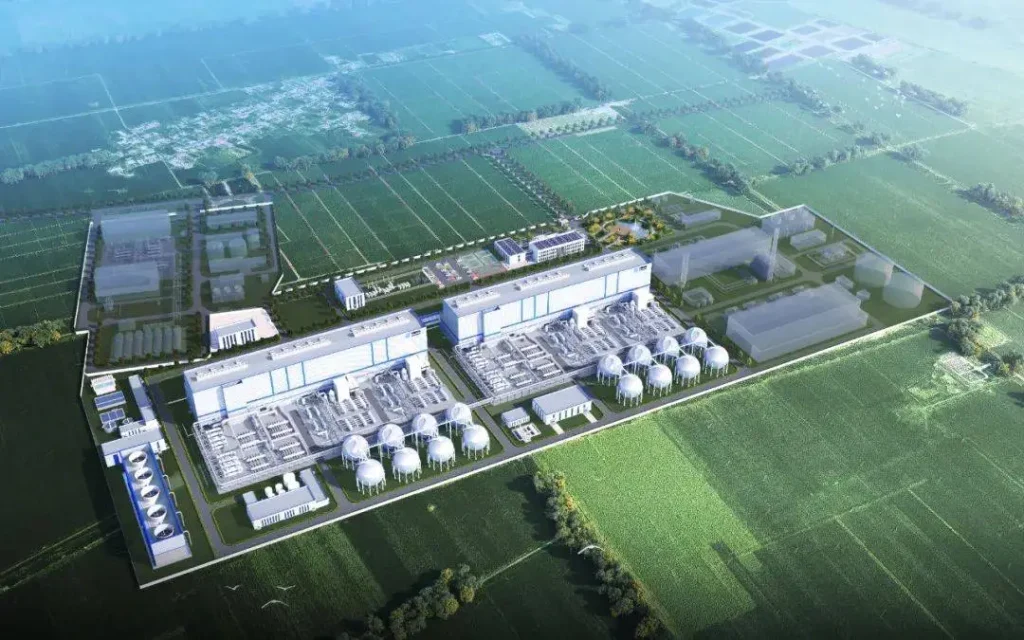
China Achieves Key Breakthrough in Long-Duration Green Energy Storage Technology
On September 12, the world’s largest salt cavern compressed air energy storage (CAES) project in Jintan, Jiangsu, successfully completed the full-group startup test of its two units. This test has comprehensively verified the operational stability and system coordination of all equipment, marking that China has achieved critical breakthroughs in both core key technologies and system integration capabilities in the field of large-scale non-supplementary-fired compressed air energy storage.
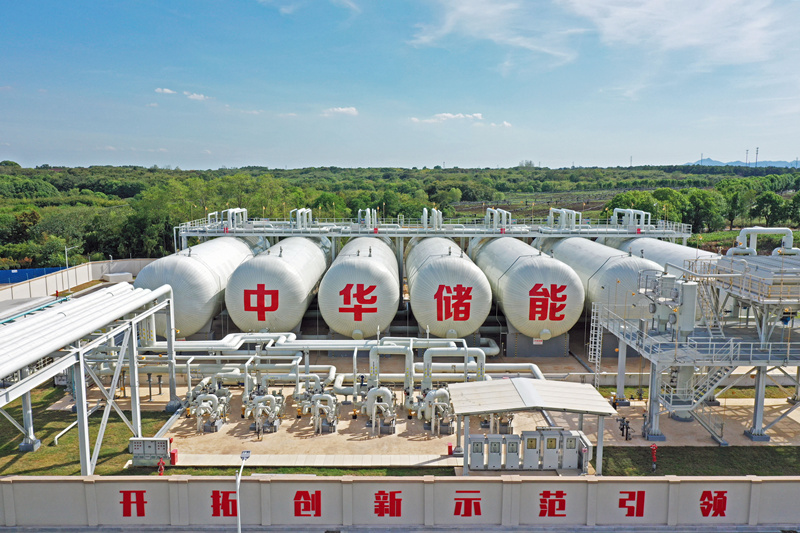
Leveraging the excellent natural tightness of underground salt caverns to store high-pressure air, the project operates on the mode of storing electricity during off-peak hours and generating power during peak hours, achieving zero carbon emissions throughout the entire process. It acts like a custom-built “super power bank” for the power grid, providing crucial support for the integration of high-proportion new energy.
- What is Compressed Air Energy Storage?
Compressed air energy storage is a long-duration, large-scale green energy storage technology that enables time-space shifting of electric energy. Its operating logic is straightforward:
During off-peak electricity consumption periods, surplus non-peak power from the grid drives compressors to pressurize ambient air to over 130 atmospheres, injecting it into underground salt caverns for long-term storage. At the same time, a dedicated heat storage system fully recovers and retains the heat generated during air compression, without discharging waste heat to the environment.
During peak electricity consumption periods, the high-pressure air in the salt cavern is steadily released, heated with the previously stored thermal energy, and finally drives a turbo-generator set to feed electricity into the grid.
The entire process requires no combustion of any fossil fuels, producing zero flue gas and zero carbon emissions. It truly realizes the green storage and efficient release of electric energy, making it one of the most promising long-duration energy storage technologies for large-scale promotion.
- Three Core Equipment Systems Power the “Super Power Bank”
To achieve the design goals of ”fast charging, powerful discharging, and reliable storage”, the project adopts an industry-leading ultra-large-capacity equipment system in three key links: heat storage, air injection/production, and intelligent dispatch.
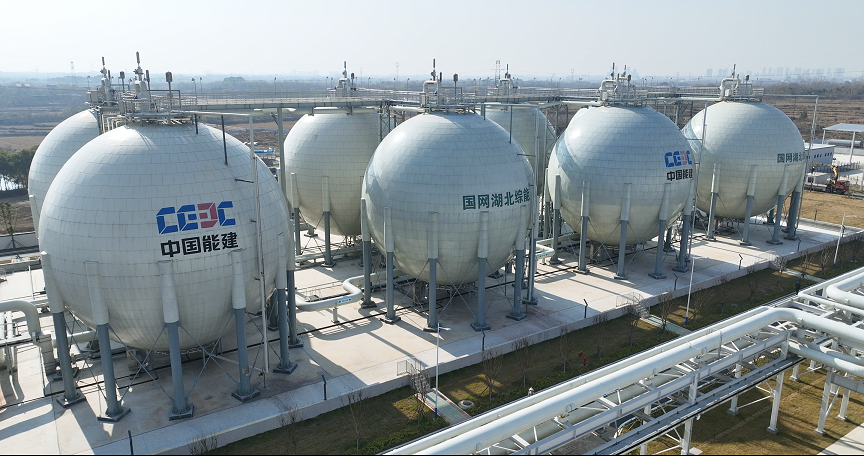
Asia’s Largest Thermal Storage Spherical Tank Matrix: Locking Thermal Energy in Water
The project is equipped with 16 spherical thermal storage tanks, each with a volume of 3,500 cubic meters. The total water storage capacity reaches 56,000 cubic meters, equivalent to the total water volume of 22 standard swimming pools. It is currently the largest single-capacity thermal storage spherical tank matrix in the compressed air energy storage sector across Asia.
The core function of these giant spherical tanks is to store the heat generated during air compression in the water inside the tanks. To enhance heat storage density, the system increases the internal pressure during operation, raising the boiling point of water from 100°C at normal pressure to 180°C. Just like giant sealed “pressure cookers”, they store far more thermal energy without changing the liquid state of water. When the power generation mode starts, this high-temperature water quickly releases heat to warm the high-pressure air, significantly improving the generating efficiency of the units.
China’s Largest-Diameter Air Injection-Production Well: The “Throat” of Compressed Air
The gas well pipeline is the only channel connecting the ground units to the underground salt cavern, and it is also the “throat” that determines the air throughput efficiency. The project adopts the largest-diameter air injection-production well in China’s current compressed air energy storage sector, with an hourly air flow capacity of up to 2.16 million cubic meters.
To achieve long-cycle safe operation, engineers have applied special anti-corrosion and sealing treatment to the entire section of the well pipe, which is equivalent to putting a “lifetime protective suit” on the pipeline. This ensures that the gas well can operate stably for decades without damage or leakage. This design greatly improves the coordination efficiency between the salt cavern and the ground units, enabling high-pressure air to achieve large-flow rapid throughput at both charging and discharging ends.
Full-Link Central Control Center: The “Smart Brain” of the Power Station
The central control room of the project is the dispatch hub of the entire energy storage station. On the monitoring screen, operation and maintenance personnel can not only view the real-time parameters of ground equipment such as compressors and generators, but also clearly grasp the storage status of high-pressure air in the salt cavern 1,000 meters underground, including pressure and temperature.
After all key operation data are uniformly aggregated to the central control platform, operation and maintenance personnel can realize one-click monitoring and unified dispatch of the entire process: from the storage and release of high-pressure air, to the recovery and utilization of thermal energy in the heat storage system, and then to the precise output regulation of the generator set, all processes are automatically coordinated. This allows this “extra-large power bank” to flexibly respond to the complex and variable load demands of the power grid, maintaining efficient, safe and stable operation throughout.
- Why Choose Salt Caverns as Energy Storage Carriers?
Many people may wonder: why store compressed air in underground salt caverns? This choice stems from the one-of-a-kind physical properties of salt deposits themselves.
The formation of salt caverns is a natural by-product of traditional salt mining: when exploiting underground salt mines, workers inject fresh water underground to dissolve solid salt crystals into brine, which is then pumped out to the surface for salt production. With continuous salt dissolution mining, huge artificial cavities naturally form deep underground.
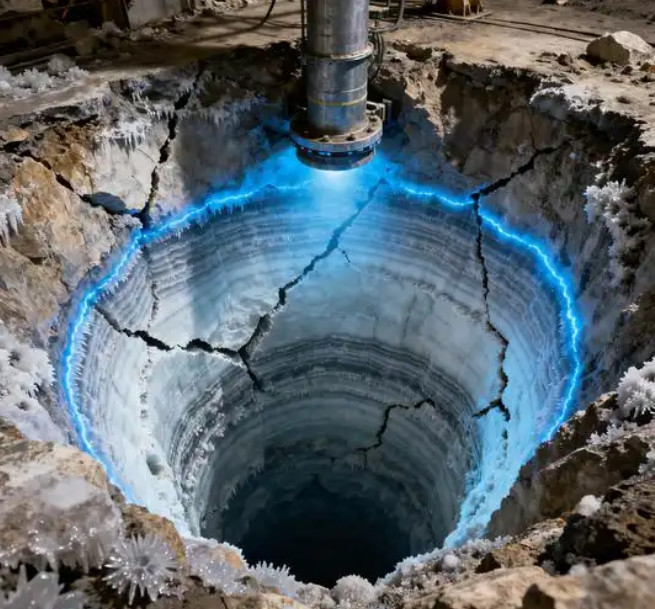
Rock salt itself has near-perfect tightness, making it extremely difficult for gas molecules to permeate and escape, with almost no gas leakage. This natural airtightness makes the underground cavities formed by depleted salt mines an ideal carrier for large-scale long-term storage of high-pressure air. It not only revitalizes the otherwise abandoned salt mine resources, but also eliminates the high cost of building large-scale high-pressure gas storage facilities on the ground, truly realizing the vision of ”seeking space from the underground and pursuing efficiency through technology”.
Long-Duration Green Energy Storage Bridges the Key Gap for New Energy Development
With the large-scale grid connection of intermittent new energy sources such as wind power and photovoltaic power, the power grid is seeing rapidly growing demand for long-duration, large-capacity green energy storage. Such salt cavern-based compressed air energy storage power stations, through the closed-loop recycling of heat and gas storage, can flexibly balance grid supply and demand on a time scale of several hours or even across days.
In the future, this type of long-duration energy storage project will become an important “stabilizer” for the new power system, effectively smoothing the volatility of new energy generation and providing solid support for the consumption of high-proportion new energy and the safe and stable operation of the power grid.