
0
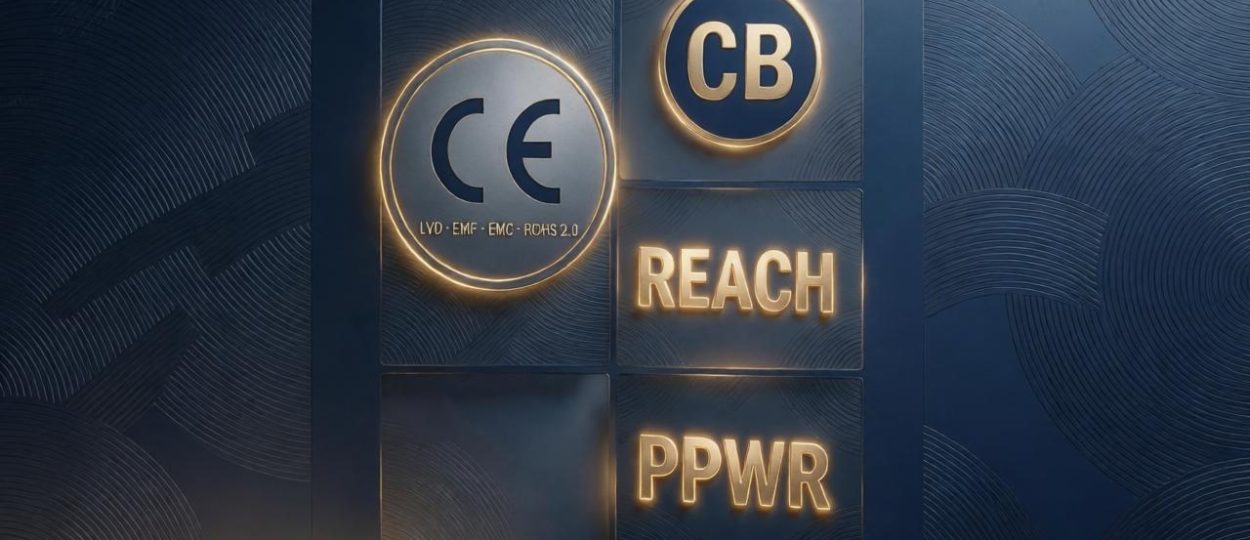
Some Tips about the Certification of Home Appliances export to Europe
Summary Table of Full Compliance Certification Standards for Washing Machines Exported to the EU
| Certification / Directive Name | Core Control Dimensions | Corresponding Test Standards / Regulation Numbers | Applicable Scenarios | Remarks |
| CE-LVD Low Voltage Directive | Electrical safety, electric shock protection, fire prevention, mechanical injury prevention | EN 60335-2-7:2010 + A1:2013 + A11:2013; EN 60335-1:2012 + A11:2014 | All household electrical products operating at AC 50V-1000V or DC 75V-1500V | |
| CE-EMF Electromagnetic Field Assessment | Protection of human health from electromagnetic field exposure | EN 62233:2008 | Mandatory for household appliance products; incorporated into the LVD compliance system | |
| CE-EMC Electromagnetic Compatibility Directive | Electromagnetic interference emission and electromagnetic immunity | EN 55014-1, EN 55014-2,EN 61000-3-2, EN 61000-3-3 | All powered electrical and electronic products, to avoid interfering with surrounding equipment while resisting external interference | |
| CE-RoHS 2.0 Hazardous Substances Directive | Control of 10 restricted hazardous substances | IEC 62321 series; EN IEC 63000:2018 | All electrical and electronic products; restricts the use of hazardous substances such as lead, cadmium and phthalates | |
| CB International Mutual Recognition Certification | Global mutual recognition of electrotechnical product safety | IEC 60335 series | After a single round of testing, results can be quickly converted into local certifications in 50+ countries worldwide, avoiding duplicate testing | |
| REACH Chemicals Regulation | Safety control of chemical substances across all product categories | EC No 1907/2006; SVHC 253-substance screening criteria; Annex XVII restricted substances list | All consumer products entering the EU market; home appliances additionally require targeted testing of high-risk homogeneous materials | |
| PPWR Packaging and Packaging Waste Regulation | Environmental compliance across the entire packaging life cycle | EU 2025/2026 packaging regulations; heavy metals ≤100 mg/kg limit standard; PFAS restriction requirements | Packaging accompanying all products exported to the EU; fully mandatory from August 2026 |
EU Compliance Testing Priorities for Washing Machines:
Priority 1: Mandatory Items for Customs Clearance (Failure to complete means immediate cargo detention)
These are the core compliance requirements covered by 100% of EU customs spot checks — baseline items that must be 100% completed for every export shipment, with no room for exemption whatsoever.
- ✅ CE-LVD full-scope testing: Covers EN 60335-1+EN 60335-2-7 in full, including the EMF electromagnetic field assessment
- ✅ CE-EMC full-scope testing: Covers both emission and immunity modules, with harmonics and voltage-fluctuation tests completed in parallel
- ✅ RoHS 2.0 testing of 10 substances in homogeneous materials: Disassemble core components such as the motor, plastic housing and wiring harnesses for hazardous substance screening
- ✅ PPWR packaging compliance: Complete packaging heavy-metal testing + EPR registration in the destination country to obtain a valid registration number
Priority 2: Cost-Saving Items (One test reused across multiple countries)
Investment in this tier can substantially reduce the duplicate testing costs of later expansion into other EU/global markets, and is best prioritized by factories with long-term overseas expansion plans.
- ✅ CB certification testing: Complete full-scope testing based on IEC 60335, which can later be converted directly into certifications for multiple countries such as UKCA (UK) and GS (Germany), with no need to repeat safety testing
- ✅ REACH SVHC batch screening of 253 substances: Unified testing of all high-risk washing machine components (rubber door seals, PVC wiring harnesses, modified plastics); the report can be reused across the entire home appliance product line
⚡ Priority 3: On-Demand Supplementary Items (Only when requested by customers)
These are not official EU mandatory requirements; they are arranged only to meet the additional commercial requirements of specific buyers, avoiding unnecessary testing costs.
- ✅ LFGB food-contact testing: Required only when the product is a special washing machine with a fruit-and-vegetable washing function, targeting cavity components that come into contact with food
- ✅ Buyer-specific factory audit testing: e.g., supply-chain compliance audits specific to Walmart or IKEA — start only after securing the corresponding order
💡 Key Cost Optimization Tips
- Prioritize ILAC-accredited laboratories for bundled LVD+EMC+RoHS combined testing, which can save 30%-40% of total costs compared with separate individual tests
- Washing machines of the same series with different capacities can be covered under a single test report, as long as their core safety components such as the main control board and motor are completely identical — greatly diluting the per-model testing cost
- Under the new EU rules taking effect in 2026, all compliance technical files must be uniformly archived and retained for at least 10 years, to avoid costly re-testing if regulatory spot checks are carried out later
⚠️ Critical Pitfall Warnings
Never buy the cheap “piggyback CE certificates” sold for a few hundred yuan just to save costs. Such certificates mostly fail to cover the washing-machine-specific clauses of EN 60335-2-7 and are completely invalid compliance documents. Once discovered in an EU customs spot check, the entire shipment will be detained and returned, the product will be added to the EU non-compliant product blacklist, and all subsequent export shipments will be subject to intensified inspection.