0
Energy Efficiency Standards for Washing Machines: A Complete Guide for Global Buyers
In today’s global appliance market, energy efficiency has become one of the most important factors when selecting washing machines. Consumers, distributors, and importers are increasingly looking for products that provide excellent washing performance while reducing electricity consumption, water usage, and environmental impact.
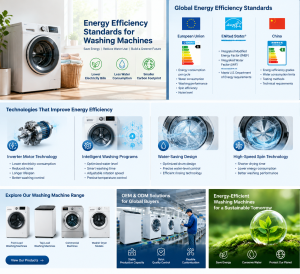
Energy Efficiency Standards
For washing machine manufacturers and suppliers, meeting international energy efficiency standards is not only a regulatory requirement but also a key competitive advantage. At Moore E Business, we focus on providing reliable washing machine solutions designed to meet the evolving needs of global markets.
Explore our [washing machine product range]to learn more about our appliance solutions.
Why Energy Efficiency Matters in Washing Machines
A washing machine consumes energy mainly through:
-
- Motor operation
-
- Water heating (for models with heating functions)
-
- Washing cycles
-
- Drying functions in washer-dryer models
-
- Standby operation
An energy-efficient washing machine helps customers:
-
- Reduce electricity bills
-
- Lower water consumption
-
- Reduce carbon emissions
-
- Achieve better long-term operating costs
For distributors and retailers, energy-efficient products also provide stronger market appeal because many countries now require appliance manufacturers to comply with minimum energy performance standards and energy labels.
Major Global Energy Efficiency Standards for Washing Machines
Different regions have developed their own testing methods and labeling systems. Manufacturers serving international markets need to understand these requirements.
1. European Union Energy Efficiency Requirements
The European market has strict requirements for household appliances. Washing machines sold in Europe must comply with energy labeling regulations and provide consumers with clear information about energy consumption, water usage, and performance.
Important evaluation factors include:
-
- Energy consumption per washing cycle
-
- Water consumption
-
- Washing performance
-
- Spin efficiency
-
- Noise level
Energy-efficient designs such as inverter motors, optimized washing programs, and intelligent control systems help manufacturers achieve better energy classifications.
Moore E Business provides washing machine solutions suitable for international markets. Learn more about our [energy-saving washing machine models].
2. United States ENERGY STAR® Standards
In the United States, ENERGY STAR certified washing machines must meet strict efficiency requirements. The certification evaluates factors including:
-
- Integrated Modified Energy Factor (IMEF)
-
- Integrated Water Factor (IWF)
Higher IMEF values indicate better energy performance, while lower IWF values represent improved water efficiency. ENERGY STAR
Energy-efficient washing machines designed for the U.S. market commonly include:
-
- High-efficiency motors
-
- Advanced washing algorithms
-
- Reduced water usage technology
-
- Improved spin performance
Manufacturers supplying North American customers should ensure products meet applicable U.S. Department of Energy requirements and testing procedures. The Department of Energy’s Energy.gov
3. China Washing Machine Energy Efficiency Standards
China has established national standards for washing machine energy and water efficiency. These standards define:
-
- Energy efficiency grades
-
- Water consumption limits
-
- Testing methods
-
- Technical requirements
The latest standards classify washing machines into different efficiency levels, with Grade 1 representing the highest efficiency category. ChinaStandards
For manufacturers exporting from China, compliance with these standards helps ensure product quality and international competitiveness.
Visit our [China washing machine manufacturing solutions]page to learn how Moore E Business supports global buyers.
Technologies That Improve Washing Machine Energy Efficiency
Modern washing machines use several technologies to reduce energy consumption.
1. Inverter Motor Technology
Traditional motors operate mainly at fixed speeds, while inverter motors can adjust operating speed according to load conditions.
Benefits include:
-
- Lower electricity consumption
-
- Reduced noise
-
- Longer product lifespan
-
- Better washing control
2. Intelligent Washing Programs
Modern washing machines use sensors and smart controls to optimize:
-
- Water level
-
- Washing time
-
- Rotation speed
-
- Temperature
This prevents unnecessary energy usage while maintaining washing performance.
3. Water-Saving Design
Since heating water often requires significant energy, reducing water consumption directly contributes to energy savings.
Water-saving features include:
-
- Optimized drum design
-
- Precise water-level control
-
- Efficient rinsing technology
4. High-Speed Spin Technology
A stronger spin cycle removes more water from clothes before drying.
Advantages:
-
- Shorter drying time
-
- Lower energy consumption
-
- Improved user experience
How to Choose an Energy-Efficient Washing Machine Supplier
For importers and distributors, choosing the right supplier is essential.
Before purchasing, buyers should consider:
1. Product Certifications
Check whether products meet required standards, such as:
-
- CE certification
-
- Energy labels
-
- Safety certifications
-
- Regional compliance requirements
2. Manufacturing Capability
A professional supplier should provide:
-
- Stable production capacity
-
- Quality control procedures
-
- OEM/ODM services
-
- Export experience
Learn more about our [OEM and private label washing machine services].
3. Product Customization Options
Different markets have different requirements. A reliable manufacturer should support:
-
- Voltage customization
-
- Appearance customization
-
- Packaging solutions
-
- Brand customization
The Future of Energy-Efficient Washing Machines
The washing machine industry is moving toward smarter and greener solutions.
Future trends include:
-
- AI-based washing optimization
-
- IoT-connected appliances
-
- More efficient motors
-
- Lower water consumption
-
- Environmentally friendly materials
Manufacturers that invest in energy-efficient technologies will be better positioned to serve global customers.
Conclusion
Energy efficiency standards play an important role in the global washing machine industry. They protect consumers, reduce environmental impact, and encourage manufacturers to develop better technologies.
For businesses looking for reliable washing machine suppliers, selecting a manufacturer with strong quality control, international experience, and energy-efficient product designs is essential.
Moore E Business is committed to providing professional washing machine solutions for global partners. Explore our [washing machine products] or [contact our team for a customized solution] today.